



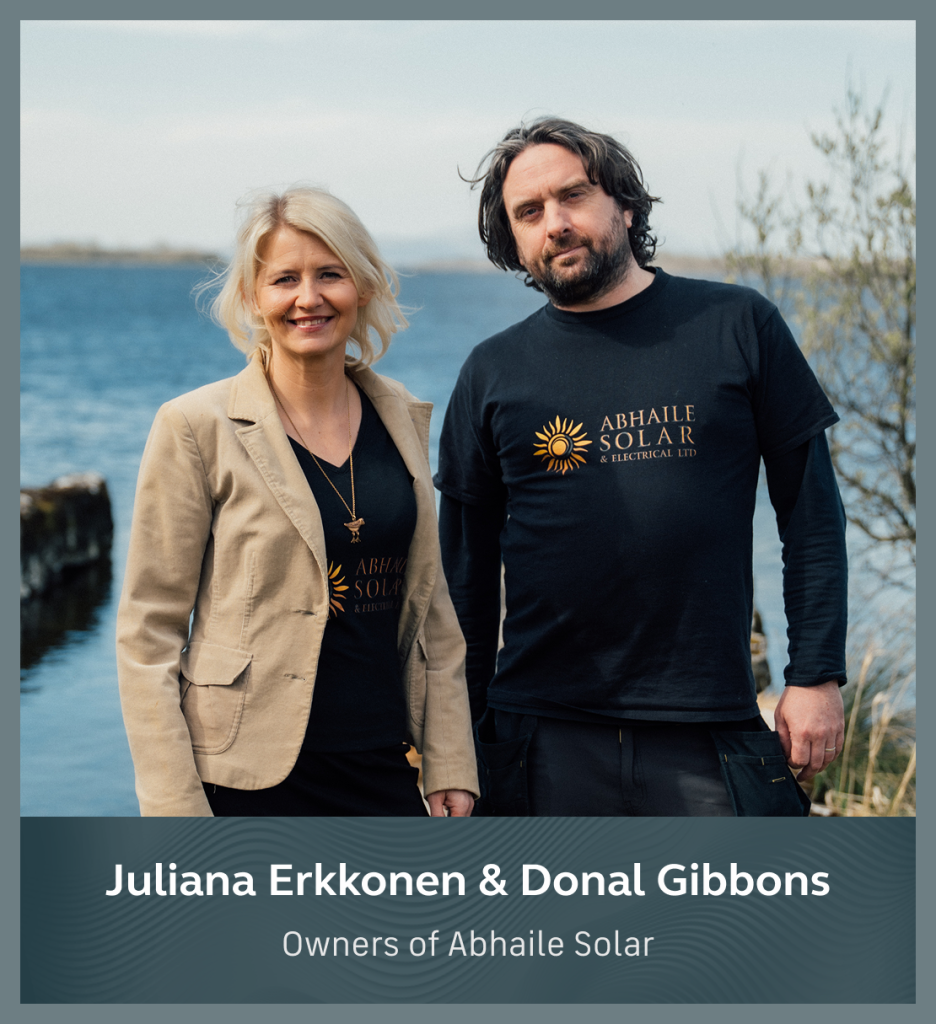
Abhaile Solar fits solar panel systems across Tuam and the wider north Galway area, including Ballygaddy, Belclare, Kilbannon, Cortoon, Sylane, Barnaderg, Abbeyknockmoy and Kilconly, and out towards Dunmore, Milltown and Corofin. Tuam is a working town with a genuine mix of building types, from limestone terraces near the cathedral to the large estates built out through the nineties and two-thousands, plus a farming hinterland and a cluster of commercial units on the edge of town. Each of those calls for a different approach, and we design accordingly rather than pushing a standard package.
Our base is at Keekill outside Headford, roughly twenty minutes down the road, so Tuam is very much home turf for us. We’ve installed over 500 systems nationally with more than thirty years of electrical trade experience behind the business, and we handle everything from the free survey and the SEAI grant application through to installation, the ESB Networks connection and the aftercare afterwards.
What Tuam’s Mix of Town Homes, Estates and Farms Means for Solar
The estate housing around Tuam tends to be the most straightforward work we do. Concrete tile roofs, consistent pitch, a decent unbroken run of roof on at least one elevation, and enough space to fit a system that makes a real difference to the bill rather than nibbling at it.
Older properties closer to the town centre take more care. Slate roofs need assessing for condition and batten integrity before anything gets fixed to them, cable routes through older buildings are rarely straight, and anything near the cathedral or in the older streets may sit within a protected structure or an architectural conservation area, which affects what can go where and whether it can be seen from the street. We’d rather flag that at survey stage than have you find out later.
Out in the townlands the constraints change again. Farmhouses and rural bungalows usually have plenty of roof, and often a shed or outbuilding that faces better than the house does. Where the dwelling roof isn’t the right home for the panels, running them off a shed roof or on a ground mounted frame is frequently the better technical answer, and there’s normally the space here to do it.
Solar for Tuam Businesses, Farms and Commercial Premises
Tuam has more commercial and agricultural demand than most towns its size, and both benefit disproportionately from solar for the same underlying reason: the electricity gets used at the moment it’s generated.
A business unit running machinery, refrigeration, compressors or lighting through the working day is consuming power at exactly the hours the panels are producing it, so very little is exported at the lower rate and the payback shortens accordingly. The same logic applies to a dairy operation with milking, plate cooling and bulk tank refrigeration, or a poultry or pig unit with continuous ventilation load. Roof area is rarely the limiting factor on a farm shed. Usually it’s the incoming supply and how much of the generation you can genuinely absorb, both of which we work through at survey.
What Tuam Homeowners Actually Save
Most households we install for see electricity bills drop by somewhere in the region of 50% to 70%, though the honest answer is that it depends more on when you use power than on how much.
There’s a useful distinction in Tuam that doesn’t apply everywhere. A good share of households here work locally in the town or are retired, and someone at home through the middle of the day uses solar generation as it’s produced, which is the most valuable way to use it. Households commuting to Galway on the M17 have the opposite pattern, with the house empty through peak generating hours. That second group gets far more out of a battery, because it shifts the midday output into the evening when everyone’s back and the oven, kettle and immersion are going. We’ll tell you which camp you’re in and size the battery accordingly, or tell you if you don’t need one.
SEAI Grant Funding for Tuam Homes and Businesses
Homes in Tuam qualify for the SEAI Domestic Solar PV Grant of up to €1,800, on the same terms as anywhere in the State. It comes off the cost of the installation and meaningfully shortens the payback period.
Businesses and farms are covered by separate grant support that scales with the size of the system, so a larger commercial or agricultural array can attract a higher level of funding. Given the daytime consumption patterns typical of both, it’s the combination of grant support and high self-consumption that makes these projects stack up.
We complete and submit the grant paperwork ourselves, along with the ESB Networks NC6 application. You won’t be filling in forms or chasing anyone.
How a Tuam Installation Runs, Start to Finish

Consultation and proposal. Send us your Eircode and a recent ESB bill. We’ll assess the usage pattern, carry out a free survey at the property, and put a written proposal together based on what we’ve seen on site.
Installation and commissioning. We lodge the SEAI grant application, notify ESB Networks and book the date. Our own team fits the array, ties it into the board, commissions the system and sets up your monitoring app before leaving.
Sign-off and aftercare. Once the system’s live we complete the paperwork, arrange the BER assessment and see the grant through to payment. You’re covered by a five-year labour warranty, and we’re twenty minutes away if anything needs looking at.