



Abhaile Solar installs solar PV for homes and farms in Shrule and the surrounding townlands, covering Glencorrib, Dalgan, Moyne, Kilroe, Brackloon, Kilmaine and Cross, and across the river into the Headford side. Our workshop is at Keekill, less than ten minutes down the N84, so this is about as local as our work gets.
The housing here is predominantly rural: bungalows, dormers and farmhouses on their own sites, most on oil or solid fuel heating with an immersion for hot water and a pump on a private well. That last detail matters more than it sounds, because it opens up an option that gets overlooked in a lot of quotes.
We’ve completed over 500 installations nationally with more than thirty years of electrical experience behind the business, and we handle the whole job: free survey, SEAI grant application, installation, ESB Networks connection and aftercare afterwards.
Hot Water First: Diverters, Immersions and Whether You Actually Need a Battery
Storage is the default recommendation in most solar quotes, and for plenty of households it’s the right one. But on a house with an oil boiler and an immersion cylinder, which describes most properties around Shrule, there’s a cheaper option worth considering first.
A solar diverter watches for surplus generation that would otherwise be exported and sends it to the immersion element instead, heating your hot water cylinder with electricity you’d have sold for a low rate. It costs a fraction of what a battery does. Through the summer it can cover most of a household’s hot water, which means the oil boiler stays off from around April to September rather than firing for a cylinder of water every day.
The limits are worth being clear about. A diverter only does hot water. Once the cylinder is up to temperature, surplus goes back to being exported, and it does nothing for your evening electricity demand or for running the house through a power cut. A battery does all of that, which is why it costs what it does.
Which suits you depends on the house. A property with high hot water demand and modest evening electricity use often gets more from a diverter than from storage. A household with an EV, electric heating or heavy evening consumption is better served by a battery, and some homes justify both. We’d rather work that out at survey than fit the same package to every job.
What a System Actually Generates Across the Year
People are often surprised by the shape of solar output rather than the total, so it’s worth setting expectations honestly before you spend money.
As a rough working figure, a system in this part of the country produces somewhere in the region of 850 to 950 units a year for every kilowatt of panels installed, though the actual number depends on orientation, pitch and shading at your particular site. That’s the annual total.
The distribution is the important part. The great bulk of that generation, typically somewhere between two thirds and three quarters of it, arrives between April and September. A good day in June might produce several times what a good day in December does, because the sun is higher and the daylight hours are far longer. From November through February, output is thin regardless of how good the system is.
This is not a reason to avoid solar. It is a reason to size the system against your annual consumption rather than a summer bill, and it’s the main argument for storage on a smart tariff, since a battery can keep working on price difference through the months when generation is low. Anyone quoting you figures that imply steady output all year round is not being straight with you.
On the Border: Does It Matter Which County You’re In?
Shrule sits on the county boundary and we work both sides of it constantly, so this comes up often enough to answer directly.
For almost everything that affects a solar installation, the county makes no difference at all. The SEAI grant is national and the amount is the same either side of the river. Clean Export Guarantee payments come from your electricity supplier, not your local authority. ESB Networks handles connections nationally. The technical standards, the paperwork and the process are identical.
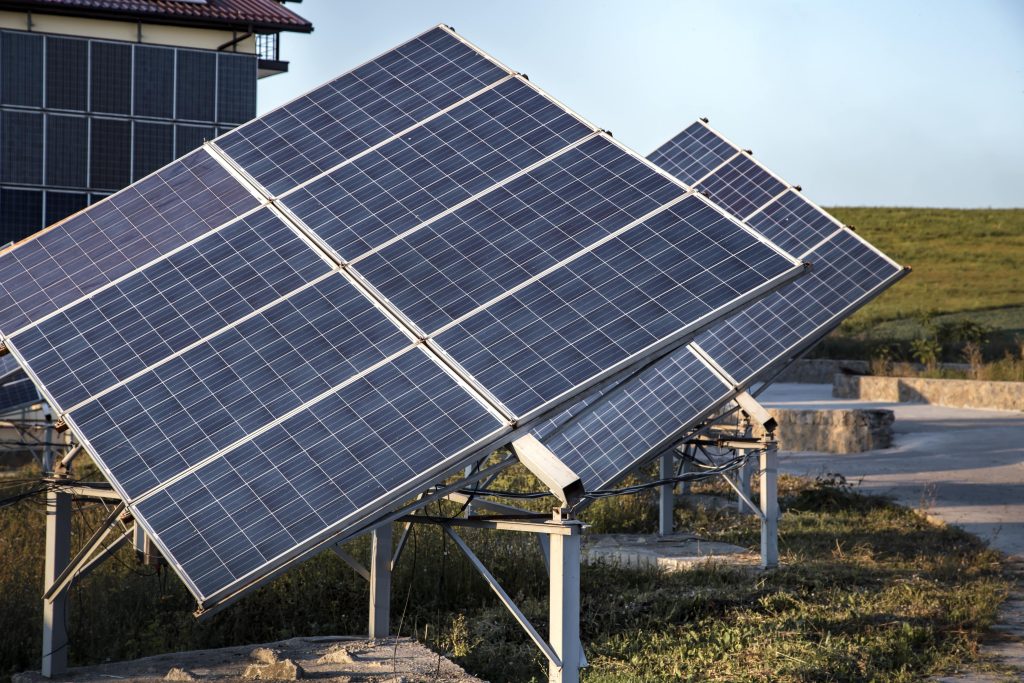
The one thing that differs is planning, where your property falls under either Mayo County Council or Galway County Council. For a standard roof-mounted domestic array that rarely matters, since the exemption for rooftop solar on houses is set nationally. It becomes relevant if you’re looking at a ground mounted array, which carries siting conditions, or if your property is a protected structure or sits within a conservation area. In those cases it’s the council for your side of the boundary you’d be dealing with, and we’ll point you in the right direction at survey.
Homes and Farms Around Shrule, Glencorrib and Kilmaine
Rural properties here generally suit solar well: decent roof area, little overshadowing, and frequently a shed or garage with better orientation than the house.
On farms, the array often makes more sense on a shed roof, provided the construction and condition suit it. The point to check first is which supply the buildings are on, because a system wired into the yard meter offsets the yard’s consumption rather than the house’s, and on many holdings those are two separate accounts. If you have two bills, bring both to the survey.
Well pumps, immersions and workshop tools all lift the daytime electrical baseline higher than people expect, which works in your favour when sizing a system.
What Shrule Households Save
Most households see electricity bills fall by roughly 50% to 70%, with the outcome decided by how much generation you use directly rather than export.
Farming households and anyone home during the day are in the strongest position, using generation at the point it’s produced. Households commuting into Galway on the N84 have the opposite pattern, with the house empty through the best generating hours, and for them either storage or a diverter is what stops that output being sold cheaply and bought back dear.
SEAI Grants for Shrule Properties
The SEAI Domestic Solar PV Grant of up to €1,800 applies to eligible homes in Shrule on the same terms as anywhere in the State, regardless of which side of the county boundary you’re on. It comes straight off the installation cost.
Farms and businesses come under separate SEAI support that scales with the size of the system installed. We complete and submit the grant application and the ESB Networks paperwork on your behalf.
From Enquiry to Grant Payment

Survey and proposal. Send your Eircode and a recent ESB bill, or both bills where the house and yard are separately metered. We survey free of charge, assessing roof condition, orientation, shading, hot water arrangement and supply, then issue a written proposal.
Installation and commissioning. We lodge the grant application, notify ESB Networks and agree a date. Our own team fits and commissions the system, connects it and sets up your monitoring app before leaving.
Documentation and aftercare. We complete the paperwork, arrange the BER assessment where applicable and see the grant through to payment. The work carries a five-year labour warranty, and we’re ten minutes down the road afterwards.