



Abhaile Solar installs solar PV for homes, farms and lettings around Cornamona and the northern shore of Lough Corrib, covering Clonbur, Maam, Dringeen and the townlands running back into Joyce Country. We work out of Keekill outside Headford, and this is regular ground for us rather than somewhere we’d treat as a special trip.
Two things come up here often enough to be worth addressing head on. The first is a straightforward misunderstanding about what solar panels actually do, which is worth clearing up before anyone spends money. The second is buildings with no electricity supply at all, which is a more common situation in this part of the county than people outside it would guess.
We’ve completed over 500 installations nationally with more than thirty years of electrical experience behind the business, and we handle the whole job from free survey through to grant payment and aftercare.
What Solar Will and Won’t Do for Heating Your House
There are two entirely different technologies sold as “solar panels”, and mixing them up leads to disappointment.
Solar thermal panels heat water directly. They’re plumbing rather than electrics, they feed a hot water cylinder, and they do one job. Solar PV, which is what we install, generates electricity. It powers everything in the house that runs on electricity, and it can be exported or stored, which solar thermal cannot.
So does PV heat your house? Not directly, and anyone implying otherwise is overselling it. If you’re heating with oil, turf or a stove, the panels will not reduce what you burn, because the heating system doesn’t run on electricity in the first place. What PV does reduce is your electricity bill, and on most properties out here that’s a bigger number than people expect once you account for the well pump, the immersion, appliances and lighting.
There are two ways PV does touch heating, and both are worth knowing. A solar diverter sends surplus generation to your immersion element, heating the cylinder with electricity you’d otherwise have exported cheaply, which through the summer can cover most of a household’s hot water and keep the boiler off. And if you ever move to a heat pump, your heating shifts onto the electricity meter, at which point solar starts offsetting heating directly. That’s an argument for building some headroom into the system size if a heat pump is a possibility down the line.
Off-Grid and Standalone Systems for Sheds, Pumps and Remote Buildings
Plenty of properties around Joyce Country have a building the electricity never reached: a shed up the hill, a pump house, an outbuilding across a field, a cabin on the shore.
The usual route to powering one is to run a supply out from the house or apply for a new connection, and on any real distance that gets expensive fast, between trenching, cabling and whatever the connection itself costs. On a long run over rough or rocky ground it can be enough to shelve the idea entirely.
A standalone solar system is often the cheaper answer. Panels, a small battery and a controller on the building itself, sized for what it actually needs, with no connection to the grid and no trench. For lighting, a water pump, a gate, a camera, a fence energiser or the odd power tool, a modest system does the job perfectly well and there’s no ongoing standing charge on a second supply.
The limits are real: run a welder or a milking plant off it and you’ll be disappointed, and winter output in this part of the country is thin, so anything critical needs generous battery capacity and honest expectations. Worth knowing too that standalone installations of this kind generally sit outside the SEAI domestic grant, which is aimed at the home itself, so the economics stand on the cost of the alternative rather than on grant support.
Homes, Hill Farms and Lettings Around Corr na Móna
Rural houses here usually have decent roof area and open aspect, though high ground nearby can block the low winter sun for part of the day, which affects the winter contribution more than the annual total. Roof condition on older properties is worth establishing early, since fitting an array over a roof with only a few years left means removing it again later.
Hill farms tend to have modest electrical demand, concentrated around pumping, lighting and a workshop, so a system sized against actual consumption will outperform a larger one that exports most of what it makes. Holiday cottages and angling lets have high summer occupancy that lines up well with peak generation, and much more export outside the season.
What Households Here Save
Most households see electricity bills fall by roughly 50% to 70%, with the outcome decided by how much generation you use as it’s produced rather than export.
Anyone at home during the day is already consuming at the most valuable rate. Where the house is empty through the best generating hours, storage is what converts midday output into evening savings. Given how thin generation gets between November and February, a battery on a smart tariff also earns its keep in winter by charging on the cheap night rate and discharging through the expensive evening peak.
SEAI Grants for Cornamona Properties
The SEAI Domestic Solar PV Grant of up to €1,800 applies to eligible homes here on the same terms as anywhere in the State, coming straight off the installation cost.
Farms, businesses and commercially let properties come under separate SEAI support that scales with the size of the system. Standalone off-grid systems for outbuildings generally fall outside the domestic scheme, and we’ll tell you that plainly rather than let you assume otherwise.
For grant-eligible work we complete and submit the application and the ESB Networks paperwork on your behalf.
From Enquiry to Grant Payment
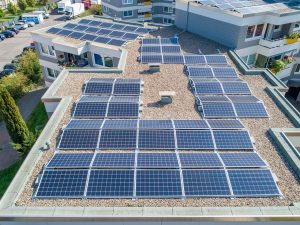
Survey and proposal. Send your Eircode and a recent ESB bill. We survey free of charge, assessing roof condition and orientation, horizon and shading, supply arrangement and what you want the system to achieve, then issue a written proposal.
Installation and commissioning. We lodge the grant application, notify ESB Networks and agree a date. Our own team fits and commissions the system, sets up any backup or diverter arrangement and configures your monitoring app.
Documentation and aftercare. We complete the paperwork, arrange the BER assessment where applicable and see the grant through to payment, with a five-year labour warranty on the work.